
 By
By For Ugandans living, studying or working in the United States, this is a week worth paying attention to.
Three significant immigration developments are taking place around September 15 and 18, with potential implications for international students, exchange visitors, foreign journalists, green-card applicants and others navigating the U.S. immigration system.
The changes come as the United States approaches October 1, the beginning of its 2027 fiscal year, when a new annual allocation of immigrant visa numbers takes effect.
Here is what is changing.
1. New rules for students, exchange visitors and foreign journalists

The Department of Homeland Security had planned to replace the long-standing “Duration of Status” system for people in F, J and I nonimmigrant categories with fixed periods of admission from September 15.
However, just one day before the rule was due to take effect, a federal judge blocked its implementation.
U.S. District Judge F. Dennis Saylor IV issued a nationwide preliminary injunction on September 14, temporarily preventing the Department of Homeland Security from implementing the new rule while a legal challenge continues. This means the new fixed-period system has NOT taken effect, and the existing Duration of Status system remains in place for now.
The F category covers international academic students, J covers exchange visitors, while I covers representatives of foreign media.
Under the proposed system, F and J visa holders would generally have been admitted for fixed periods of up to four years, while I visa holders would have faced a maximum admission period of 240 days, with those needing additional time required to seek an extension.
The court order is temporary and does not permanently cancel the rule. The legal challenge will continue, meaning the position could change as the case progresses.
For international students, exchange visitors and foreign journalists, the immediate situation therefore remains under the existing Duration of Status framework. Those affected should continue following the requirements of their current immigration status and monitor official U.S. immigration updates.
2. Green-card applicants face a new public-charge framework
Another major change arrives on September 18.
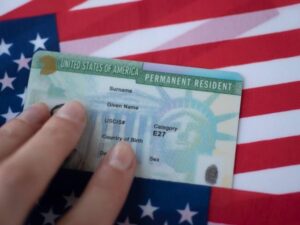
The Department of Homeland Security’s new public-charge rule takes effect that day and applies to certain applications for admission and adjustment of status filed from that date. The rule rescinds the 2022 public-charge regulations and gives immigration officers broader discretion when assessing whether an applicant is likely to become a public charge.
The change is particularly relevant to people applying for permanent residence through adjustment of status using Form I-485.
USCIS has also issued a new edition of Form I-485 for use from September 18. Applicants filing from that date need to use the applicable new edition rather than an older version.
The public-charge assessment does not automatically mean that receiving a particular benefit will result in a green-card denial. Rather, the new framework changes how officers assess the circumstances relevant to the public-charge ground of inadmissibility.
There are also categories of immigrants for whom the public-charge ground does not apply, so applicants should not assume the rule applies to everyone seeking permanent residence.
Because immigration circumstances differ from one person to another, anyone with a pending or upcoming adjustment-of-status application should check the latest USCIS guidance or seek qualified immigration advice before making decisions about an application or benefits.
3. The October Visa Bulletin is around the corner
The third development is the upcoming October Visa Bulletin from the U.S. Department of State.
The Visa Bulletin is closely watched by people waiting for family-sponsored and employment-based immigrant visas because it sets the priority-date cut-offs used to determine when certain applicants can move forward.
October is particularly important because it marks the beginning of a new U.S. fiscal year and a new annual allocation of immigrant visa numbers.
The September 2026 bulletin, the current official bulletin at the time of writing, shows different cut-off dates across family-sponsored and employment-based categories and countries. It also notes that visa availability can change as demand develops and annual limits are reached.
For applicants whose cases depend on a priority date, the release of the October bulletin could therefore be significant.
However, the October 2026 bulletin had not yet been published on the U.S. Department of State’s Visa Bulletin page when this article was prepared on September 16.
What this means for Ugandans in the U.S.
The changes do not affect every Ugandan in the United States in the same way.
An international student may need to pay closer attention to the new admission period and updated forms. A Ugandan journalist working in the U.S. may be affected by the changes to the I classification. Someone applying for a green card may need to understand the new public-charge framework and ensure the correct I-485 edition is used. And families waiting for immigrant visas may be watching the October Visa Bulletin for movement in their category.
The most important message is simple: check the rule that applies to your particular immigration status rather than relying on general information circulating on social media.
USCIS and the U.S. Department of State remain the authoritative sources for immigration forms, filing requirements and visa availability.

For anyone with a case already in progress, a small date or form-number change can matter.
And this week, several of those dates have changed.