

 By
By As Uganda marks 64 years of independence, Ugandans at home and abroad are looking beyond celebrations. What does independence really mean when citizens still worry about corruption, service delivery, the rule of law, economic liberation and their security?
Uganda marks 64 years since independence from British colonial rule. For Ugandans in the diaspora, the occasion is more than a commemoration of 1962. It is also an opportunity to reflect on what it means to remain a citizen of a country to which they continue to send money, build homes, invest, return to and call home.
More Ugandans in the diaspora are also embracing dual citizenship, perhaps a sign that they still feel Ugandan at heart many years after relocating to their adopted new homes.
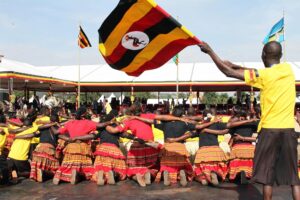
The current events are increasingly difficult to separate from the quality of governance.
Uganda’s Constitution is unequivocal, public offices are held in trust for the people, leaders are answerable to citizens, and lawful measures should be taken to combat corruption and abuse of power. It also provides for democratic participation and broadly representative government.
Yet corruption and poor service delivery remain persistent concerns. In recent months, Local Government Minister Balaam Barugahara’s nationwide inspections have resulted in disciplinary action against 110 local government staff over allegations including misuse of public funds, absenteeism, procurement irregularities and poorly implemented projects. President Yoweri Museveni has also recently urged NRM legislators to embrace Balaam’s grassroots approach to fighting corruption.
But there is a deeper question about whether such sweeps are treating the symptoms rather than the causes of poor service delivery. Some of the officials being picked up have served in local government for years, while others are politically connected cadres. If public services continue to suffer, the problem may go beyond individual absenteeism or misconduct to the management of public resources, embezzlement and procurement failures.
High-profile scandals involving taxpayers’ money, including controversies around the botched national number plates deal, have also raised questions about accountability and, more broadly, a sense of national responsibility. The concern is not simply whether an individual official has broken a rule, but whether public office is being treated as a responsibility to the country and its people.
Perhaps the answer therefore requires more than disciplinary action. Patriotism and national guidance could have a role in reminding those entrusted with public resources that public service is ultimately service to the nation.
Perhaps introducing elements such as a national flag day, while rallying citizens around a zero-waste culture against the wastage of national resources and encouraging them to keep the country clean, could also inspire a stronger sense of national identity and ownership. The excitement surrounding the revival of the national career, the marathon and the newly built stadiums across the country shows how shared national activities can bring Ugandans together and generate a sense of pride in the country.
For many Ugandans abroad, however, independence also raises a more fundamental question, can citizens trust the institutions meant to protect them?
Reports of security forces detaining government critics, including allegations of people being taken to undisclosed locations, have renewed concerns about due process and the rule of law. Human Rights Watch has documented several such cases in 2026 and called for respect for constitutional rights and due process. The government has maintained that national security and sovereignty must be protected.
As much as Uganda has experienced relative peace over the last 40 years, concerns over censorship of the media, bribery and nepotism have raised questions about whether some of the gains of the past are being eroded.
The concerns also invite a revisit of the National Resistance Movement’s 10-Point Programme, which placed democracy, security, an independent and self-sustaining economy, improved social services and the elimination of corruption and misuse of power among its priorities. Four decades later, and after the many presidents Uganda has had since independence, the question remains whether the promise of economic liberation and accountable government has been fully realised.
For many ordinary Ugandans, the economic mood is itself part of the Independence Day conversation, the cost of living, employment, access to services and the distribution of the national cake continue to shape how citizens experience the country. Questions around regional representation, merit, nepotism and access to opportunities remain part of that conversation.
These concerns are particularly significant for a diaspora whose relationship with Uganda is no longer defined simply by residence. Uganda’s diaspora sent home an estimated $2.5 billion in 2025, equivalent to about 3.8 per cent of GDP, according to Bank of Uganda figures. The United States, Saudi Arabia, United Kingdom, United Arab Emirates and Canada were among the major sources.
The diaspora is therefore not merely watching Uganda from afar. It is helping finance families, education, businesses and the wider economy.
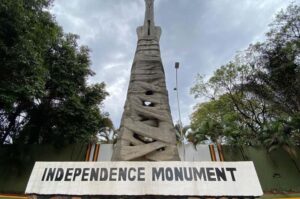
And so, at 64, perhaps the meaning of independence should not be measured only by the country’s ability to govern itself without colonial rule. It should also be measured by how confidently its citizens can exercise their rights, access public services, seek justice, question authority and participate in shaping their country’s future.
For the Ugandan abroad, uhuru is not simply the freedom of a country. It is the freedom to remain a citizen even from a distance and to know that citizenship comes with rights, dignity, protection and a voice.
Sixty-four years on, the question is not whether Uganda is independent.
It is whether every Ugandan feels fully free to be a citizen of that independent nation.