
 By
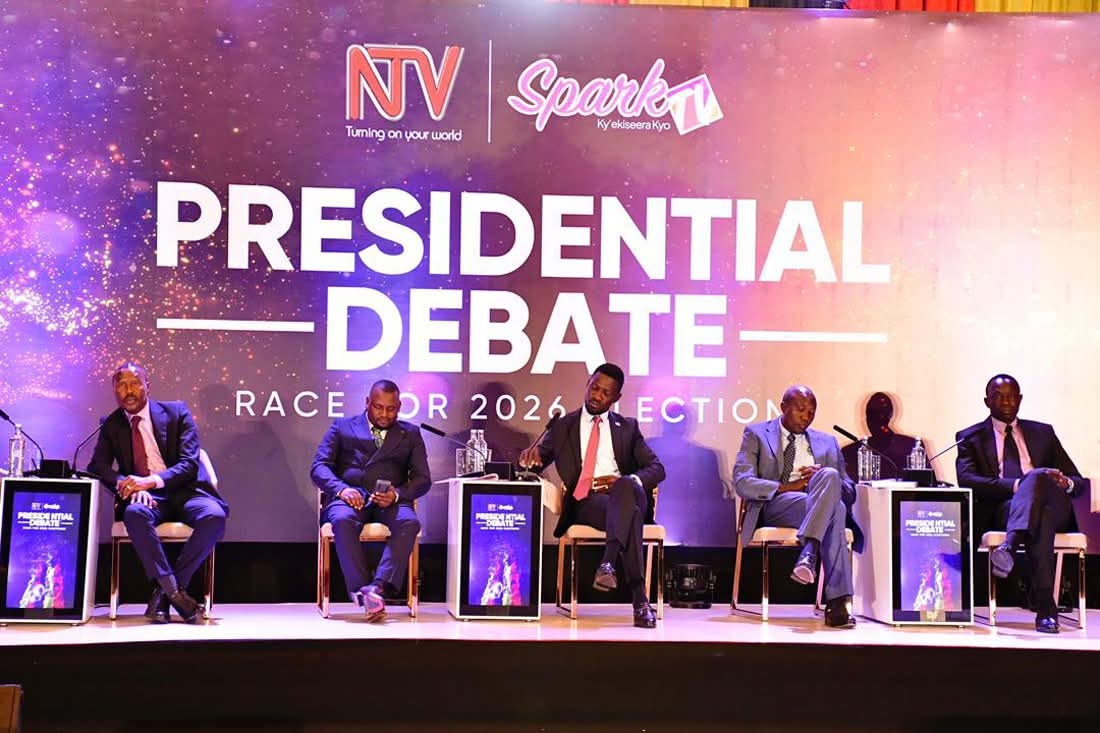
By Ugandans in Kampala and across the globe tuned in for a rare presidential debate courtesy of the Nation Media Group as election fever catches on. On Sunday night, NTV Uganda delivered an issue-focused debate at Serena Hotel, covering governance, accountability, national unity, and the country’s future.
Yet while the night was historic, it was not without gaps — and several takeaways emerged.
Moderators
For a prime-time national event, many viewers felt NTV could have deployed its most seasoned anchors, experienced journalists capable of commanding political weight.
The two moderators, while professional, lacked the gravitas and depth expected for such a high-stakes event. They held the show together, but the night occasionally demanded more authority, firmer follow-ups, and sharper interrogation.
Takeaway: Future debates need moderators with stronger political command, editorial depth, and the confidence to challenge inconsistencies and push candidates beyond rehearsed talking points.
Missing in Action
President Yoweri Museveni, the man meant to defend Uganda’s 40-year legacy and now seeking a seventh term, was absent. He cited a late invitation and a programme “not aligned” with the Electoral Commission schedule.
One candidate joked, “Maybe he didn’t come because we’re talking about the future, not the past.” The hall erupted — even the sign-language interpreter paused momentarily.
Also missing was Kasibante, while Elton John Mabirizi — known for his spirited 2016 performance but absent in 2020 — made a notable return, adding curiosity and nostalgia to the lineup.
Mubarak Munyagwa, despite being a frequent political commentator on several YouTube channels, was also among those who missed the event. His absence stood out precisely because he is often vocal and visible in online political discussions, leaving many viewers wondering why such an active contributor to public discourse did not take part in this nationally significant debate.
Candidates Performance Highlights
Frank Bulira (RPP)
Frank Bulira emerged confident, sharp, and quick on his feet — even poking Bobi Wine about his previous unsuccessful attempt to unseat the President. His delivery was crisp, his policy positions clear, and his humour strategic.
He injected energy into a debate that, at moments, risked sinking into monotony. His assertiveness, preparedness, and relatable style made him the night’s breakout contender.
Why he carried the day:
Bulira blended confidence, clarity, and charisma — three things voters rarely get in one package from lesser-known candidates. Viewers across platforms consistently ranked him the most improved and the most surprising performer.
Robert Kyagulanyi Ssentamu (Bobi Wine)
Bobi Wine leaned heavily into unity, justice, and youth inclusion. His messaging resonated powerfully with younger voters and the diaspora, and he remained one of the most quotable candidates of the night.
However, he occasionally defaulted to familiar talking points, which limited the element of surprise.
Strength: Emotional connection and moral clarity.
Weakness: Predictability in responses.
Nathan Nandala Mafabi (FDC)
Despite his strong political pedigree and economic expertise, Nandala Mafabi struggled to break down his ideas for the average voter. His delivery often sounded overly technical, making his good points less impactful.
Strength: Deep policy knowledge.
Weakness: Communication gap.
Mugisha Muntu
Calm, principled, and disciplined in tone. Muntu remained the night’s moral compass emphasising institutional reform, dignity in leadership, and long-term governance.
His strength is consistency, but his quiet approach meant he didn’t dominate the stage.
Strength: Thoughtful, structured argumentation.
Weakness: Low emotional punch.
Who Carried the Day?
While Bobi Wine and Muntu delivered their expected strengths, Frank Bulira was the night’s defining surprise.
He captured attention, challenged his rivals, delivered clear answers, and showed unexpected political maturity. If debates are meant to shift perception, Bulira walked away with the biggest credibility gain.
Fairness Note
Many voters felt that every candidate should be asked the same core questions to maintain neutrality.
A uniform question structure ensures:
Equal opportunity to explain policy
Transparent comparison across candidates
Reduced perception of media bias
More focused, voter-relevant discussions