
 By
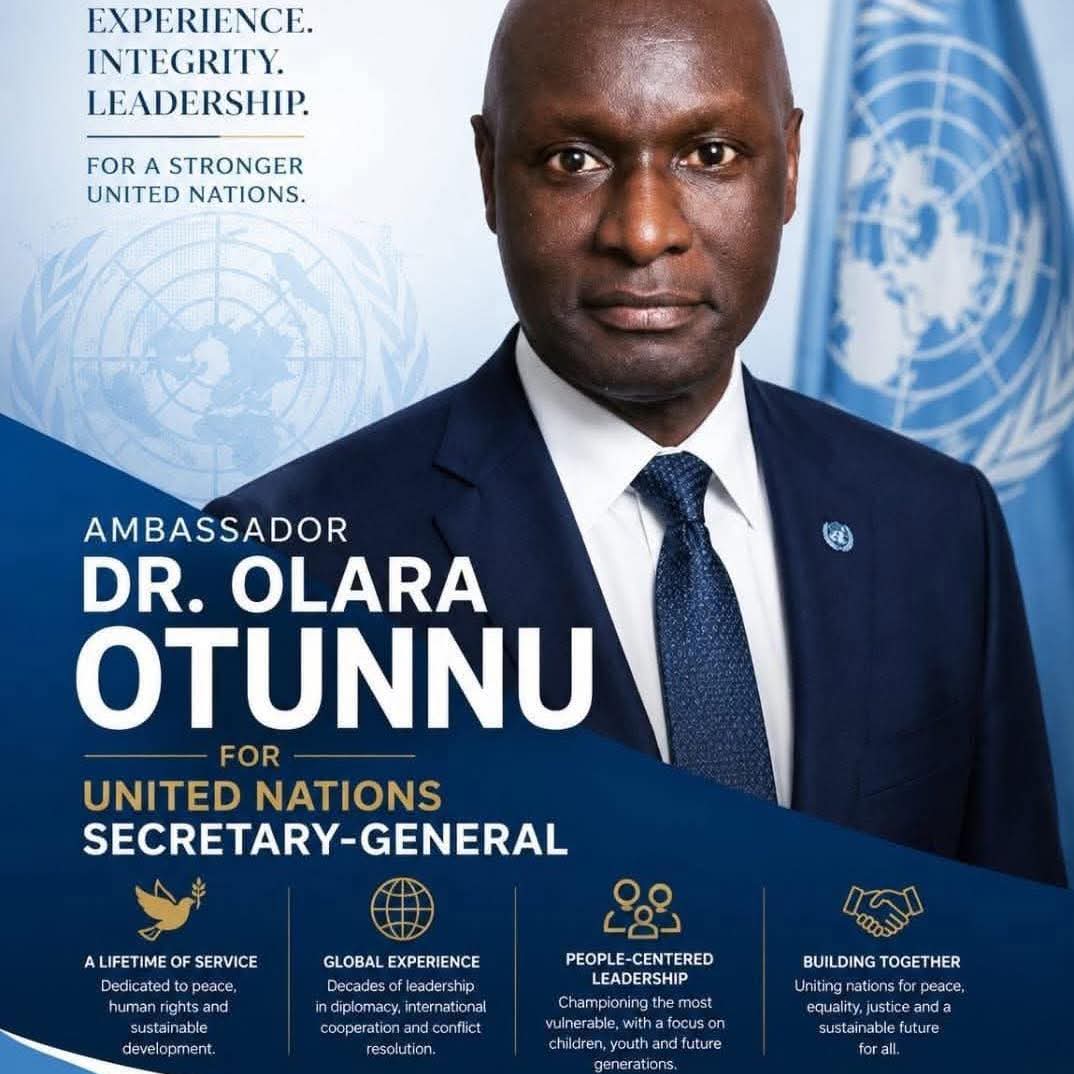
By Uganda has officially nominated veteran diplomat Ambassador Olara Otunnu for the position of United Nations Secretary-General, placing one of the country’s most distinguished international figures in contention to lead the world’s largest multilateral organisation when Secretary-General António Guterres completes his second and final term at the end of 2026.
The nomination marks a significant moment for Uganda’s diplomatic standing, bringing renewed international attention to Otunnu’s decades-long career in diplomacy, peacebuilding and human rights advocacy.
Who is Olara Otunnu?
Ambassador Olara Otunnu is widely regarded as one of Uganda’s most accomplished diplomats, with a distinguished career spanning international diplomacy, human rights advocacy and public service. An international lawyer, peace advocate and former presidential candidate, Otunnu has spent more than four decades advancing peace, justice and multilateral cooperation.
He served as Uganda’s Permanent Representative to the United Nations before being appointed the UN’s first Under-Secretary-General and Special Representative for Children and Armed Conflict, a pioneering role he held from 1998 to 2005. During his tenure, Otunnu was instrumental in making the protection of children affected by armed conflict a permanent item on the United Nations Security Council’s agenda, strengthening global efforts to end the recruitment of child soldiers and improve accountability for grave violations against children in war.
Uganda’s Case for His Nomination
Uganda’s Ministry of Foreign Affairs says the nomination reflects Otunnu’s more than four decades of leadership across diplomacy, government, academia and civil society. The government believes his breadth of experience positions him well to lead the United Nations at a time when the organisation is confronting armed conflicts, humanitarian crises, climate change, widening inequalities and the rapid emergence of new technologies.
In his vision for the role, Otunnu has called for renewed confidence in multilateralism through practical institutional reforms. He has also proposed greater international cooperation to resolve conflicts, accelerate climate action while supporting sustainable development, and establish stronger global oversight of artificial intelligence.
The Road to the UN’s Top Job
The race to succeed António Guterres is expected to draw candidates from several regions of the world. Under the UN selection process, candidates are first considered by the 15-member Security Council, where a recommendation requires the support of at least nine members and no veto from any of the five permanent members—China, France, Russia, the United Kingdom and the United States. The successful candidate is then formally appointed by the 193-member United Nations General Assembly.
Why the Nomination Matters
While the selection process remains highly competitive, Uganda’s nomination of Otunnu underscores the country’s confidence in one of its most respected diplomats. His extensive experience within the UN system and longstanding commitment to peace, justice and the protection of vulnerable populations have earned him international recognition.
Whether his bid ultimately succeeds or not, Otunnu’s candidacy places Uganda at the centre of an important global conversation about the future leadership of the United Nations. It also highlights the country’s contribution to international diplomacy through leaders whose work has helped shape international policy and advance the principles of peace, human rights and multilateral cooperation.