

 By
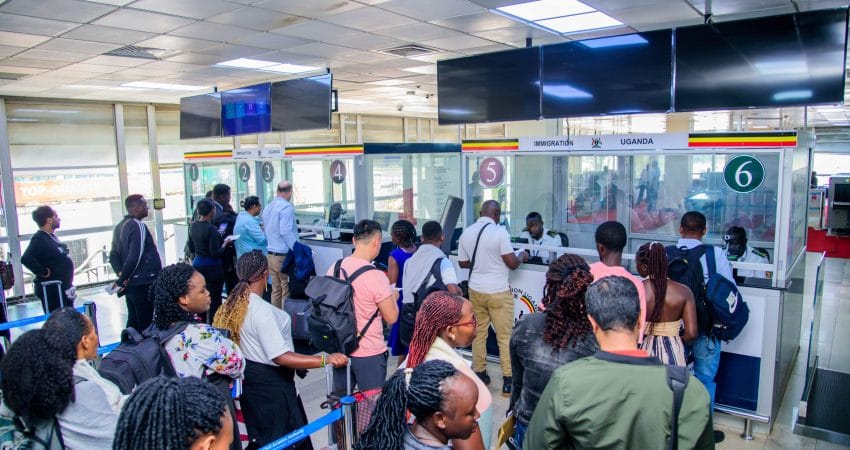
By The United States has extended Ebola-related entry restrictions affecting travellers from Uganda for another 30 days, maintaining the measures despite Uganda’s declaration that its outbreak is over and calls from international health authorities for a review.
The US Centers for Disease Control and Prevention (CDC) issued a renewed order on October 11, extending restrictions on the entry of certain foreign nationals who have been physically present in the Democratic Republic of Congo (DRC), Uganda or South Sudan within the preceding 21 days.
The extension, which remains in effect for 30 days, comes as Ebola transmission continues in eastern DRC and health authorities investigate a fatal imported case in neighbouring Kenya involving a patient who travelled through Uganda.
The decision has renewed questions about the proportionality of applying the same entry restrictions to Uganda, which has completed the internationally recognised process for declaring an Ebola outbreak over, while transmission continues across its borders.
Uganda declared Ebola-free in August

Uganda’s Ministry of Health announced on July 28 that the country was Ebola-free after completing the required 42-day period without a new locally acquired case.
The World Health Organization (WHO) and Africa Centres for Disease Control and Prevention (Africa CDC) subsequently confirmed the end of the Bundibugyo virus disease outbreak in Uganda on August 27.
According to the two agencies, Uganda recorded 20 confirmed cases during the outbreak, which was declared on May 15, 2026, following infections linked to the DRC. The last patient, an imported case, was discharged from care on July 16.
The 42-day monitoring period is twice the virus’s maximum incubation period and is used internationally to establish that an outbreak has ended when no further cases are detected.
In July, Africa CDC Director-General Jean Kaseya called on the US government to remove Uganda from the temporary entry suspension, arguing that public health measures should reflect the country’s improving epidemiological situation.
Africa CDC said Uganda had reported no new confirmed cases since June 21 at the time of its appeal, while all 836 identified contacts had completed follow-up.
The agency proposed alternatives, including risk-based screening at departure and arrival points, health declarations, monitoring of exposed travellers and rapid referral of anyone who develops symptoms.
“Public health measures must follow the evidence,” Africa CDC said in its July statement, urging Washington to adopt safeguards tailored to Uganda’s circumstances rather than maintain a blanket approach.
Why Washington is maintaining the restrictions
The continued outbreak in the DRC remains central to the US position.
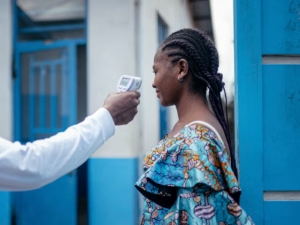
In its October 11 notice, the CDC said the renewed order was intended to protect public health against the risk of Ebola being introduced by covered foreign nationals from countries affected by the Bundibugyo virus outbreak.
The DRC continues to report infections across multiple health zones, with response teams facing challenges that include incomplete contact follow-up and the spread of cases into additional areas.
The regional picture has also become more complicated following the death of a Kenyan man who had been living in the DRC and travelled through Uganda before reaching Kenya.
In an October 8 disease outbreak update, WHO reported that Kenya had notified the agency of a laboratory-confirmed imported Bundibugyo virus disease case. The patient travelled from the DRC through Uganda, was hospitalised in Kenya and subsequently died.
Public health authorities in Kenya and Uganda initiated response measures, including contact tracing.
The case has highlighted the difficulty of monitoring people moving across borders and the need for cooperation between neighbouring countries, even where one country has officially ended its outbreak.
However, the reported journey does not, by itself, establish that Ebola transmission resumed within Uganda. Investigations and surveillance are necessary to determine whether any additional infections have occurred.
What the restrictions mean for travellers
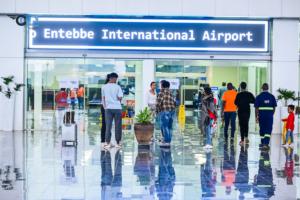
The measures do not amount to a blanket prohibition on all travel between Uganda and the United States.
Under the CDC’s guidance, certain foreign nationals who have been physically present in the DRC, Uganda or South Sudan during the 21 days before seeking entry into the US are subject to temporary entry restrictions.
US citizens and nationals who have recently been in Uganda or South Sudan, but not the DRC, are not barred from travelling to the United States under these Ebola-specific measures. Their flights are instead routed through designated US airports for enhanced public health screening.
The arrangements differ for travellers who have recently been in the DRC, for whom separate restrictions apply.
Travellers should therefore confirm the rules applicable to their nationality, immigration status, travel history and itinerary before departure.
For Ugandans living in the diaspora, the distinction is important. The extension may affect some travel plans and family visits, but it should not be interpreted as a general suspension of flights or a prohibition on every Ugandan travelling to the United States.
WHO calls for evidence-based measures
WHO has advised against restrictions on travel to or trade with countries affected by the Bundibugyo outbreak, based on the information available to the agency.

In its October 8 update, WHO said the outbreak in the DRC continued to evolve, including the expansion into an additional health zone in North Kivu. The agency maintained that response efforts should prioritise coordinated outbreak control, cross-border cooperation and sustained surveillance.
Africa CDC has similarly argued that country-specific measures would better reflect Uganda’s progress while preserving necessary safeguards against the regional spread of the disease.
The disagreement highlights a broader public health challenge: how governments can protect their populations from imported infections without imposing restrictions that may be disproportionate to the risk in individual countries.
For Uganda, the end of the outbreak is an important public health milestone, but it does not remove the need for continued vigilance. The country’s proximity to the DRC, movement across borders and the latest regional developments make surveillance and rapid detection essential.
The latest US extension means that Uganda’s Ebola-free status has not yet translated into the removal of the Ebola-related entry measures affecting travellers with recent links to the country.
Whether Washington will revise its position after further consultation with African and international health authorities remains to be seen.