
 By
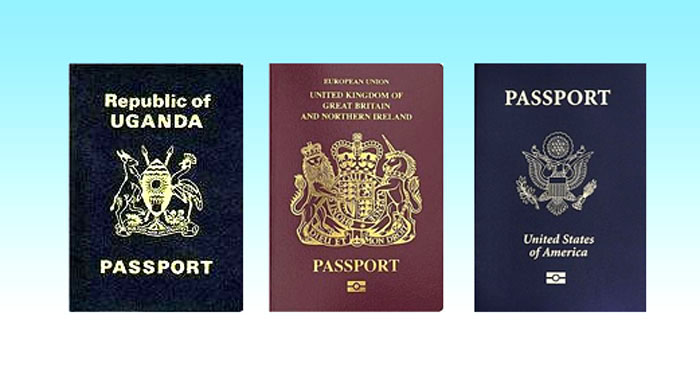
By In 2009, Uganda amended its citizenship laws to allow dual citizenship, a decision that followed years of advocacy from Ugandans living abroad. The issue gained momentum during the Uganda North American Association (UNAA) convention held in Seattle in 2007, which was attended by President Yoweri Museveni, where members of the diaspora pushed for legal recognition that Ugandans could maintain their citizenship while acquiring nationality elsewhere.
The amendment was seen as a turning point in Uganda’s relationship with its diaspora. It recognised that migration had changed the meaning of citizenship. Ugandans were studying, working, investing and raising families across the world, yet many continued to maintain strong economic, cultural and social ties with Uganda.
More than a decade later, the same law designed to strengthen that connection has become the centre of a national debate.
The question many are asking today is: Is dual citizenship an asset that allows Uganda to benefit from its global citizens, or a liability that raises concerns about loyalty and national interest?
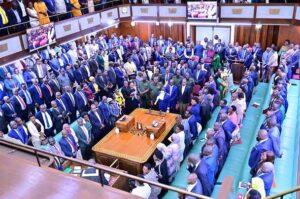
The debate intensified following the recent ministerial appointments in Uganda’s new Cabinet, where questions surrounding citizenship status affected four minister-designates—Ambassador Adonia Ayebare, Shartsi Musherure, Calvin Echodu and Dr Lawrence Muganga. Their swearing-in was delayed after citizenship concerns were raised and the matter was referred to the Solicitor General for further legal interpretation.
The controversy has since moved beyond individual appointments into a wider national conversation about what dual citizenship means for public service, security and trust in state institutions.
Dr Lawrence Muganga’s case attracted significant public attention because of the portfolio he was nominated for—State Minister for Internal Affairs. The ministry oversees some of Uganda’s most sensitive national functions, including citizenship, immigration, national identification and passport matters.
Questions around his appointment were not only linked to his Ugandan and Canadian citizenship, but also to wider concerns raised about his Rwandan heritage. Some media reports indicated that he had been granted asylum in Canada as a former Rwandan refugee based on documents presented.
Debate among Ugandans then ensued on whether it would be a threat to Uganda’s national interests to have someone who had been a national of three countries supervising such a sensitive ministry. These concerns are not new and revived Uganda’s history with individuals of Rwandan origin who have held senior positions within its security establishment.
Fred Rwigyema, a Rwandan-born refugee, rose through the ranks of Uganda’s National Resistance Army (NRA) after joining the armed struggle that brought President Museveni to power. He became an NRA commander and later served as Deputy Commander of the Ugandan Army before leaving Uganda to become a founder and commander of the Rwanda Patriotic Front (RPF). In 1990, he led the RPF invasion of Rwanda but was killed just days into the conflict.
Paul Kagame also served within Uganda’s security establishment after 1986, rising through Uganda’s military intelligence structures before leaving to join the RPF struggle. He would later become President of Rwanda. These historical precedents continue to shape public perceptions whenever nationality and security intersect in Uganda’s politics.
Supporters of diaspora inclusion, however, argue that heritage or a second nationality should not automatically determine a person’s loyalty. They contend that allegiance should be measured by transparency, professionalism and commitment to Uganda.
The debate has also drawn attention to Ambassador Adonia Ayebare, Uganda’s Permanent Representative to the United Nations, because of the sensitive nature of his diplomatic role.
For critics, the issue extends beyond holding two passports. It raises questions about competing obligations. The United States citizenship oath requires new citizens to renounce previous allegiances and pledge to support and defend the Constitution and laws of the United States.
The recent controversy has also exposed widespread public misunderstanding about how foreign citizenship is formally relinquished. Contrary to suggestions made in public debate that citizenship can simply be renounced through an email or informal declaration, both the United States and Canada require formal legal procedures. In the United States, renunciation must be made in person before a U.S. diplomatic or consular officer, with citizenship only ending after the issuance of a Certificate of Loss of Nationality, a process that can take several months, often up to six months or longer. Canada follows a similarly rigorous process. A person seeking to renounce Canadian citizenship must submit a formal application to Immigration, Refugees and Citizenship Canada (IRCC), satisfy all legal requirements and receive official approval before the renunciation takes legal effect. Depending on individual circumstances, tax compliance and other legal obligations may also need to be completed. Like the acquisition of citizenship, which is conferred through a formal oath, relinquishing it is also a structured legal process, not something ordinarily accomplished through a simple email or informal communication.
This has fuelled a broader question: if a person representing Uganda internationally also holds citizenship elsewhere, how should the country address situations where national interests between the two countries may differ? How should such an official navigate competing loyalties, or does public service to Uganda remain the overriding obligation?
Supporters of dual citizenship argue that holding another nationality does not erase a person’s identity, history or commitment to Uganda. For many in the diaspora, dual citizenship is not a symbol of divided loyalty but a practical bridge that enables them to invest, own property, establish businesses, return home freely without visa restrictions and contribute skills and capital acquired abroad.
Uganda’s diaspora has become an important economic partner through remittances, investments and expertise. Yet critics maintain that citizenship is also about responsibility and allegiance, particularly for those occupying sensitive public offices. They argue that senior officials must make full disclosure of any citizenship status that could affect public confidence or national security.
Uganda’s laws reflect this concern by restricting dual citizens from holding certain high-level offices unless specific legal requirements are met.
The real test for Uganda is whether its laws and institutions can strike a fair balance, protecting national interests while embracing the millions of Ugandans whose lives now span borders.