
 By
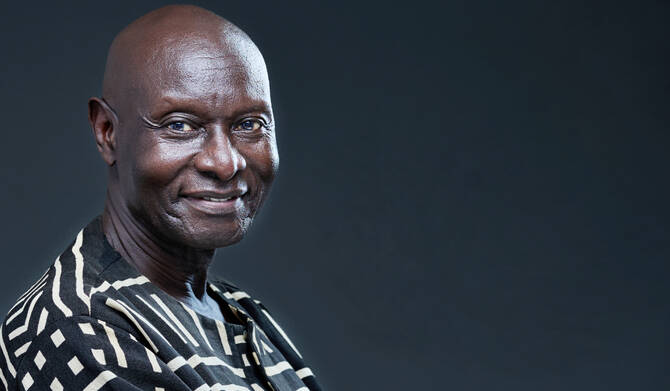
By Uganda’s bid for the United Nations’ top diplomatic post moved onto the world stage on Wednesday as Ambassador Olara Otunnu faced questions from UN member states and civil society representatives, laying out a vision centred on peace, reform and the restoration of the organisation’s moral authority.
The veteran diplomat, who is seeking to succeed António Guterres as UN Secretary-General, used the interactive dialogue at UN Headquarters in New York to argue that the organisation can no longer afford business as usual as wars, geopolitical divisions and a growing crisis of confidence continue to test the multilateral system.
“Reform is no longer an optional choice. It is an imperative,” Otunnu said, warning that without meaningful change, the UN risks further weakening its effectiveness and credibility.
Otunnu invoked the Prayer of St Francis of Assisi, calling on the United Nations to become an instrument for reconciliation in an increasingly divided world.
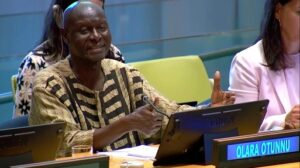
“Where there is hatred, let me sow love; where there is injury, pardon; where there is doubt, faith; where there is despair, hope; where there is darkness, light; where there is sadness, joy,” he said.
Gaza, Ukraine and Africa
The dialogue came as the UN confronts some of the most difficult crises of its modern history, including the war in Gaza, the conflict in Ukraine and continuing instability across Africa.
Otunnu said peace and security would sit at the centre of his priorities if elected, arguing that the UN’s founding purpose remains the prevention and resolution of conflict.
He has previously said the Secretary-General must engage directly with the major powers and other actors capable of influencing wars, rather than simply presiding over an organisation that reacts to crises after they have already escalated. His campaign has also identified Gaza, Ukraine and African conflicts as areas requiring urgent diplomatic attention.
For Gaza in particular, Otunnu has argued that the UN must use its diplomatic and moral authority to help move the conflict towards a sustainable political settlement while protecting civilians and upholding international law.
His position reflects a central theme of his campaign: that the Secretary-General may lack an army or the financial power of major states, but can still exercise considerable influence by bringing adversaries to the table and building consensus.
A UN that works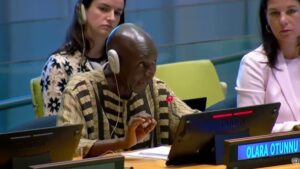
Otunnu’s reform agenda extends beyond the Security Council.
He has called for a more representative Security Council, greater efficiency within the UN bureaucracy and an end to duplication across the organisation’s agencies. He argues that an institution that is more representative and effective will also be better positioned to command international legitimacy.
The issue is particularly significant for Africa, which continues to push for permanent representation on the Security Council.
Otunnu’s own history gives the reform question an unusual dimension. As Uganda’s Permanent Representative to the UN in the early 1980s, he served as President of the Security Council and was involved in the development of the informal straw-poll mechanism now used in the Secretary-General selection process. More than four decades later, he is himself seeking the office through a process he helped shape.
From protecting children to seeking top job
Otunnu is also drawing heavily on his previous experience inside the UN.
He served as the organisation’s first Special Representative for Children and Armed Conflict from 1997 to 2005, where he pushed the protection of children affected by war higher onto the international agenda. Uganda’s nomination highlighted his work in establishing mechanisms for monitoring violations against children in armed conflict.
That experience continues to inform his campaign.
He has pledged greater attention to women and children caught in conflict, arguing that the UN must not only work to stop wars but also protect those who bear their greatest human cost.
His wider agenda also encompasses climate change, sustainable development and the governance of emerging technologies, including artificial intelligence.
The politics behind the vision
At 75, Otunnu is the oldest of the candidates currently in the race, but his campaign is built around experience accumulated across decades of diplomacy, conflict resolution and international governance.
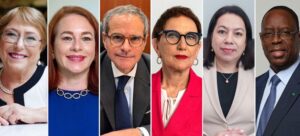
He is also entering a contest that has expanded to other candidates, including former Chilean President Michelle Bachelet, former Senegalese President Macky Sall, former Ecuadorian Foreign Minister María Fernanda Espinosa, Argentina’s Rafael Grossi and candidates from Costa Rica, Guyana and Ecuador.
For all the ideals presented in New York, Otunnu’s campaign faces a difficult political road.
The Secretary-General is appointed by the 193-member General Assembly following a recommendation from the 15-member Security Council. Any candidate must therefore secure sufficient support within the Council while avoiding a veto from any of its five permanent members: China, France, Russia, the United Kingdom and the United States.
Otunnu’s first informal Security Council straw poll in July showed the scale of the challenge. He received two votes indicating encouragement, five discouraging votes and eight members expressing no opinion, according to reported results. Costa Rica’s Rebeca Grynspan emerged as the early frontrunner.
Uganda has since stepped up its diplomatic campaign.
President Yoweri Museveni has personally lobbied representatives of Security Council members to support Otunnu, while former Prime Minister Ruhakana Rugunda is leading the campaign effort in New York.
The second informal Security Council poll is expected on August 21, making the New York dialogue particularly important for Otunnu as he attempts to turn his experience and vision into wider diplomatic support.
For Uganda, Wednesday’s dialogue was more than another campaign appearance. It was an opportunity to place one of its most experienced diplomats before the international community and make the case that, at a time of fractured global politics, the next UN chief needs not only diplomatic experience, but the patience to listen, the courage to mediate and the credibility to bring divided powers back to the same table.
The UN is expected to select Guterres’ successor later this year, with the new Secretary-General due to take office on January 1, 2027.
Watch the full UN dialogue here: https://www.youtube.com/live/LiWbLZLcq58?is=QHyrN7OdAw48NUpj