
 By
It is no secret that most women who have no children suffer silently, because to many, a ‘complete woman’ is one who is a mother. Tezra Kisakye talks to Dr Margaret Mutumba, a fertility health researcher and innovator, who delves into why societal pressures define womanhood by motherhood and the challenges faced by women who are unable to have children.
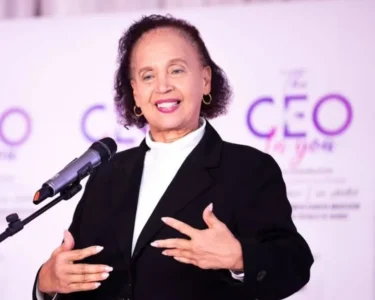
I had heard of Dr Margaret Mutumba’s illustrious achievements way before I met her. “A luminary in the scientific world,” the Uganda Diaspora Homecoming magazine wrote of her. But here I was, seated before someone whose striking eyeshadow and bold, fashion-forward outfit made her look like a supermodel. However, my stereotype of what a scientist should look like would quickly fade when she stood up to speak during the diaspora network business breakfast.
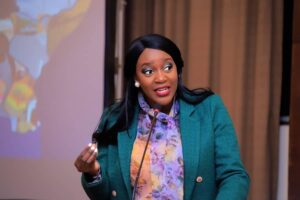
With an award in hand and a speech that radiated eloquence, my view of her shifted immediately. “This award isn’t merely recognition,” she said. “It’s evidence that any woman can accomplish anything when given the right chances.”
The Uganda Diaspora Award for Social Innovation and Impact was only another validation that Mutumba’s heart is where home is. As a fertility health scholar-advocate, Mutumba travels the world advocating for affordable, advanced reproductive technologies in Sub-Saharan Africa but especially back home in Uganda.
The founder of MedAtlas, a digital health start-up whose goal is to simplify access to specialist healthcare in Africa, Mutumba says she was shocked at how many women without children suffer in silence. “It is not only the typical village woman who faces the question of not having children. The corporate woman, too, is not spared of the judgements. This is worse if the person is married and struggling to conceive.”
“One woman came to me because she was being assaulted by her husband for not bearing children. She had to suffer insults from her mother-in-law, but it turned out it was because of the man’s infertility that they couldn’t have children. This is one of the reasons I chose reproductive advocacy, to raise awareness of male and female infertility,” she adds.

Having dreamt all her achievements into reality as a young girl raised in a humble home in Kiwatule, a Kampala suburb, to holding positions like World Health Organisation consultant and innovation director at Western University, Canada, Mutumba is a firm believer that there is much more to a woman.
Even though we should not tip-toe around women simply because of their gender, fertility experts say 30% of women could be experiencing infertility. Let alone periods, yeast infections, cramps, fibroids, stillbirth, and menopause all in the same year and sometimes the same day. And they are still showing up in life.
In Uganda, data on infertility and gender-based violence suggests that infertility increases a woman’s risk of violence at home. According to a study published in The Lancet Global Health, an HIV diagnosis was often preferred over infertility, highlighting the severe pain of this experience.
An experience, which to some, like Jane Frances Ndagire, has been a source of untold distress in her marriage. A nightmare that she endured for six years of being threatened at home and sometimes, suffering physical violence.
And Ndagire, a social worker in a non-profit organisation, is only one in a multitude of women suffering silently. Out of desperateness, some women seek help from witch doctors, or turn to church, only to be abused by unscrupulous pastors in exchange for prayer. These patterns reflect deeply ingrained societal pressures surrounding infertility in Uganda. Many women feel compelled to try every option, no matter how questionable or exploitative, as they face relentless judgment and shame.
This is where fertility doctors such as Mutumba play a crucial role. By focusing on the medical causes and offering proven solutions, she breaks her back to replace harmful myths and stereotypes to those struggling with infertility. But also challenge damaging societal norms that define a woman’s worth by her ability to conceive.
On the other hand, Edith Katende, who works for a media house, has tried to get a child naturally without success and fears the medical route is too expensive. “Unfortunately, it’s something many women don’t want to talk about. But having lost three pregnancies to miscarriage and not knowing why does not leave you the same.”
While Mutumba’s background is in public health, it’s because of such testimonies that a fierce determination was ignited to combat misinformation surrounding fertility. “Women are often judged for not having children as though their worth is solely tied to motherhood,” she says.
Therefore, her programme at Western University is engaged in partnerships with over seven African countries, including Makerere University and Mbarara University of Science and Technology, Uganda, aimed at implementing affordable medical services in remote Africa.
“Affordability is not only defined by innovative technologies. We encourage people to simply educate themselves on their bodies. One can spot the signs of infertility early on through irregular menstruation and for men, erectile dysfunction. And in other cases, drawing one’s blood, which doesn’t require expensive technology,” she notes.
She emphasises that her work is not only about technology, she also preaches a simple and clear message – let women be. In many of her talks, she addresses the damaging effects of stereotypes, emphasising that a woman’s value is not diminished by her inability to conceive.
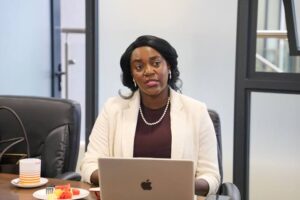
Mutumba adds that she will fight tooth and nail for fertility healthcare and technology brands to be produced locally in Uganda and reduce the need for imports. And that especially strategic mentorship structures are created for young girls and to see more women who are not afraid to dream. Reminding us that motherhood is a rewarding experience but not the only reward.
What others say
“Dr Mutumba’s research focused important attention on the critical element of women’s health and well-being. Her work has not only highlighted the complexity of providing affordable and accessible fertility services to women in Uganda and elsewhere in Africa, but it also underscores with deep sensitivity their experiences as they grapple with fertility challenges. The intelligence and empathy that she brings to this problem makes her a leading advocate for women, and for creating better and more equitable health systems,” Dr Craig Janes, Professor and past director, School of Public Health Sciences, University of Waterloo, says of Mutumba’s work.
“Vessel is Me Project partnered with MedAtlas in December 2021 to understand the challenges faced by women and couples dealing with infertility in our healing community. Dr Mutumba gave us an offer for our members who attended the workshop to receive 50% Virtual Fertility Consultation to 50 attendees. This was a first for us because IVF treatments are expensive and getting the doctors to waive their consultation fees is next to impossible. We jumped at the offer and have been delighted with the result of this partnership. We hope that through Mutumba, other organisations can join the cause to make assisted reproductive technology (IVF, ICSI, IUI) affordable for all those couples who desire to build families in Africa,” Denise Kekimuri, the team leader of Vessel is Me Project, says.
Other pursuits
Mutumba has also thrown herself into the Nnabagereka Development Foundation -USA where she is a board member to push forward the foundation’s mission – elevating the wellbeing of hundreds of children, youth and women in Uganda and beyond.
Mutumba has been recognised by other awards including the Social Innovation Award from the University of Toronto and Startup Awards by Velocity. In March, 2024 Mutumba was awarded the Women in Global Health Leadership by WomenLift Health, by the Bill and Melinda Gates Foundation.
When Mutumba is not finding solutions to infertility or helping spread awareness, she is at home being a wife and mother to her eight-year-old daughter. Together they enjoy reading, writing, fashion, swimming and creating art. A perfect example to her daughter and to all women that one should not be put in a box regardless of their choice of motherhood.
Uganda’s fertility rate
Uganda has one of the highest fertility rates in the world, with an average of 4.7 children per woman as of 2021, according to a 2021 report from the Uganda Bureau of Statistics.
Dr Daniel Kyabayinze, the director of public health at the health ministry, said: “On average every woman in Uganda has about five children. But some have children out of the fear of not leaving a surviving child.”
He says the Government has made strides to curb such fears through family planning at the community level and to “ensure that the girl child keeps in school to delay their sexual encounters and pregnancies.”
Challenges
Mutumba says one of her biggest challenges is lack of political support, legislation and funding on inclusion of affordable fertility care within national reproductive health packages. “This means the quality of treatment, mainly offered in the public sector remains unregulated and expensive. This also leads to lack of funding to include fertility care in public hospitals. Majority of reproductive financing goes towards family planning, and we continue to ignore the other side of the coin; that is family forming care,” she says.
This neglect has led to some women refusing to take contraceptives because they fear they will struggle to have children later in life if there are no affordable fertility treatment options available to them. “A health worker frankly mentioned to me that she doesn’t recommend contraceptives to her clients because fertility treatment is too expensive, if there are problems in the future. Lack of funding means few researchers have the resources to explore the issue of infertility more deeply like in developed countries,” Mutumba notes.
Moving forward, the conversation should focus on empowering women to make informed choices about their reproductive health without fear of judgment. Thanks to advocates like Mutumba, we are slowly but surely moving towards a society where a woman’s worth is not only measured by her fertility but also by her autonomy, achievements and the choices she makes. And while Mutumba defines her raison d’etre as fighting for women’s fertility and creating awareness around the issue, her ethos is simple – treat others the way you would like to be treated.
What do men say?
Kris Kato, a 35-year-old accountant and bachelor says his lack of children has been the topic at many of his family gatherings. “At some point, my family has openly matched me with random women so I can give them grandchildren. Even if I also have my reservations about having children in this economy.”
Isaac Mukibi, 32, a teacher, when asked if he would marry an infertile woman, said: “I wouldn’t marry a woman who can’t bear children. I was raised to believe that a woman must give birth and anything outside that is not acceptable.”
But contrary to Mukibi, Paul Mugisha, 35, a social worker, said: “I would marry a woman even if we can’t have children. As long as I love her, it is what counts.”