
 By
By There is a particular kind of silence in Uganda today that feels heavy following the recent political developments. It is not the silence of peace or political consensus, but one that reflects uncertainty over the country’s direction as debates over succession, shrinking civic space and the expanding role of security agencies increasingly shape the national conversation.
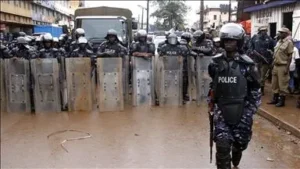
International reporting and political analyses describe Uganda as moving deeper into what some scholars have called a “late Museveni” era, a period marked by the personalisation of power and the growing centrality of security structures in governance. While the state continues to project stability and development, critics argue that political competition, independent oversight and constitutional institutions are increasingly constrained. Taken together, these developments suggest that Uganda’s transition is unfolding not as a single event, but as a gradual reconfiguration of political power.
One of the clearest political signals has come from the growing prominence of the Patriotic League of Uganda (PLU). The recent handover of its new Secretary General, attended by the new Speaker of Parliament and several prominent cabinet ministers, raised questions about whether Uganda is witnessing a subtle but significant shift from traditional National Resistance Movement (NRM) structures towards PLU as an increasingly influential political force. It was particularly striking when the Speaker publicly encouraged Ugandans to join PLU rather than simply rallying around the NRM, prompting speculation that the pressure group is assuming a more central role in shaping Uganda’s political future. Whether symbolic or strategic, the moment added another layer to the succession debate and to questions about where political authority is increasingly being exercised. The debate was further fuelled by public commentary, including remarks by Ofwono Opondo questioning whether Ugandans had voted for the NRM or PLU, reinforcing growing public discussion about where political influence now resides.
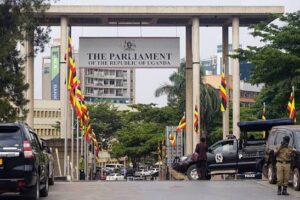
The role of Parliament itself has also become part of this broader conversation. In a constitutional system founded on the separation of powers under the 1995 Constitution, the increasingly close association between senior parliamentary leaders and emerging political formations has led some observers to question whether Parliament is maintaining sufficient institutional independence during this period of transition. The relative silence of both Parliament and the Judiciary on several politically sensitive developments has only reinforced these concerns.
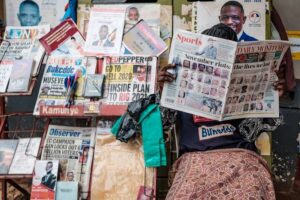
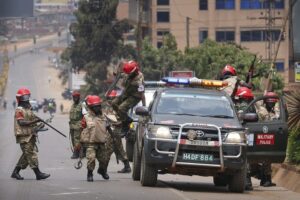
Perhaps no development illustrates these changing dynamics more vividly than the recent shutdown of Nation Media Group operations. Under military orders, security personnel surrounded and closed Daily Monitor, NTV Uganda and sister platforms including Spark TV, KFM and Dembe FM, interrupting broadcasts and newspaper operations. As the shutdown continued, several television anchors and journalists resorted to TikTok and other social media platforms to continue communicating with audiences, fuelling widespread speculation that the closures could become prolonged or even permanent. Equally striking was the apparent absence of the Uganda Communications Commission (UCC), the statutory regulator ordinarily mandated to oversee broadcasting, leaving many Ugandans questioning why a media closure of such magnitude appeared to be driven principally through military action rather than established regulatory processes. The events also heightened concerns that journalists in other media houses, fearful of similar action, may increasingly resort to self-censorship. Political commentator Timothy Kalyegira was among those who publicly reflected on the implications of the shutdowns for press freedom.
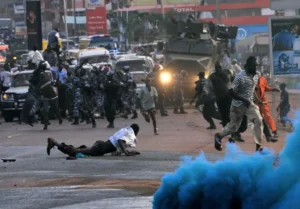
The military chief’s public dismissal of the concept of press freedom further intensified concerns over the shrinking space for independent journalism. For many observers, the episode reflected more than a dispute with individual media houses, it symbolised a broader shift in which security institutions appear increasingly central to matters traditionally handled by civilian regulatory bodies. The developments have prompted some commentators to draw parallels with the old maxim attributed to Louis XIV, “L’État, c’est moi” (“I am the State”), as a warning of the risks that arise when state institutions become increasingly identified with individual centres of power.
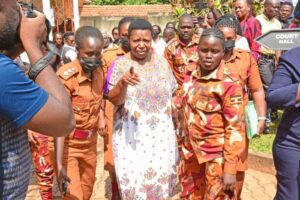
The expanding role of security agencies is equally visible in the treatment of political critics. Veteran activist Miria Matembe has publicly confirmed that security operatives searched her residence in Luzira before she was charged over alleged sectarian remarks. The case has generated significant public discussion, with critics questioning whether the particulars contained in the charge sheet sufficiently support the allegations advanced by the prosecution. Similarly, Kampala Lord Mayor Erias Lukwago has continued to face sustained political and legal confrontations, developments that many see as reflecting the increasingly tense relationship between state institutions and outspoken critics of government. Critics have also pointed to the relative silence of the Uganda Human Rights Commission and much of the diplomatic corps on arbitrary arrests and growing concerns over restrictions on press freedom.
Recent calls to expel Turkish nationals from Uganda have also drawn uncomfortable historical comparisons with Idi Amin’s 1972 expulsion of Uganda’s Asian community. While the circumstances are different, the parallels have revived debate about the use of state power, the protection of minorities and the role of constitutional safeguards during periods of political uncertainty.
For many Ugandans, perhaps the most difficult reality is the fear surrounding independent media, political expression and open debate.
What emerges across PLU, Parliament, media and security is not a single dramatic rupture, but a set of reinforcing signals pointing to gradual political reconfiguration. Power appears to be increasingly shaped through overlapping spaces, party structures, pressure groups, security institutions and regulatory gaps, rather than clearly separated democratic institutions.
The silent question remains, could this period be remembered as one of Uganda’s defining transition moments? And if so, will history record it as a moment of renewal and transformation, or as a period when institutions and democratic space became increasingly fragile?