

 By
By In the 1920s, government geologist E.J. Wayland documented oil seepages and other signs of hydrocarbons around the Albertine Graben. Exploration continued through the following decades, including the drilling of a deep well at Butiaba in 1938. After periods of limited activity, exploration gained momentum again in the 1980s and 1990s, before a breakthrough at Mputa-1 in January 2006 confirmed Uganda’s first commercial oil discovery.
Twenty years after that breakthrough, Uganda is finally preparing to sell its oil to the world.
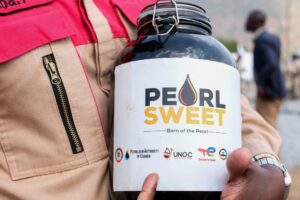
Recently, Uganda’s crude oil was officially named Pearl Sweet at the Kingfisher Development Area in Kikuube District. “Pearl” reflects Uganda’s identity as the Pearl of Africa, while “Sweet” refers to the crude’s relatively low sulphur content.
The name comes at a significant moment. Uganda expects to produce its first commercial oil by the end of September, according to the Ministry of Energy and Mineral Development.
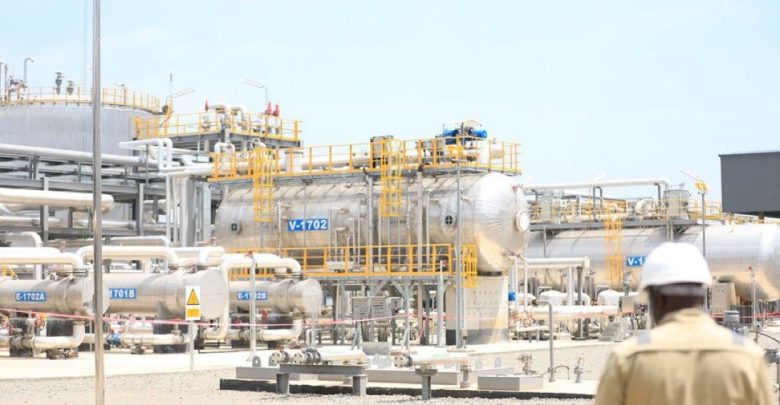
At Kingfisher, the central processing facility has reached mechanical completion, while first-oil readiness has been put at 98 per cent and commissioning is under way. The facility is designed to handle up to 40,000 barrels of crude a day.
Together, the Kingfisher and Tilenga projects are expected to reach a peak production of about 230,000 barrels per day, from Uganda’s estimated 1.65 billion barrels of recoverable oil resources.
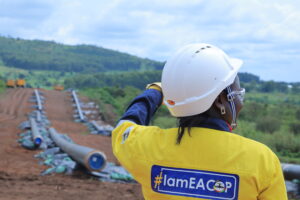
The crude is expected to travel from the Lake Albert region through the 1,443-kilometre East African Crude Oil Pipeline, or EACOP, to Tanga Port in Tanzania for export.
For Hoima and the wider Albertine region, the oil age is already changing the landscape. The pipeline has become an important source of employment, with more than 12,000 people directly employed across the project, including more than 4,000 Ugandans.
Uganda National Oil Company has appointed global commodities trader Vitol to market the government and UNOC’s share of Pearl Sweet, with exports expected to begin in early 2027.